

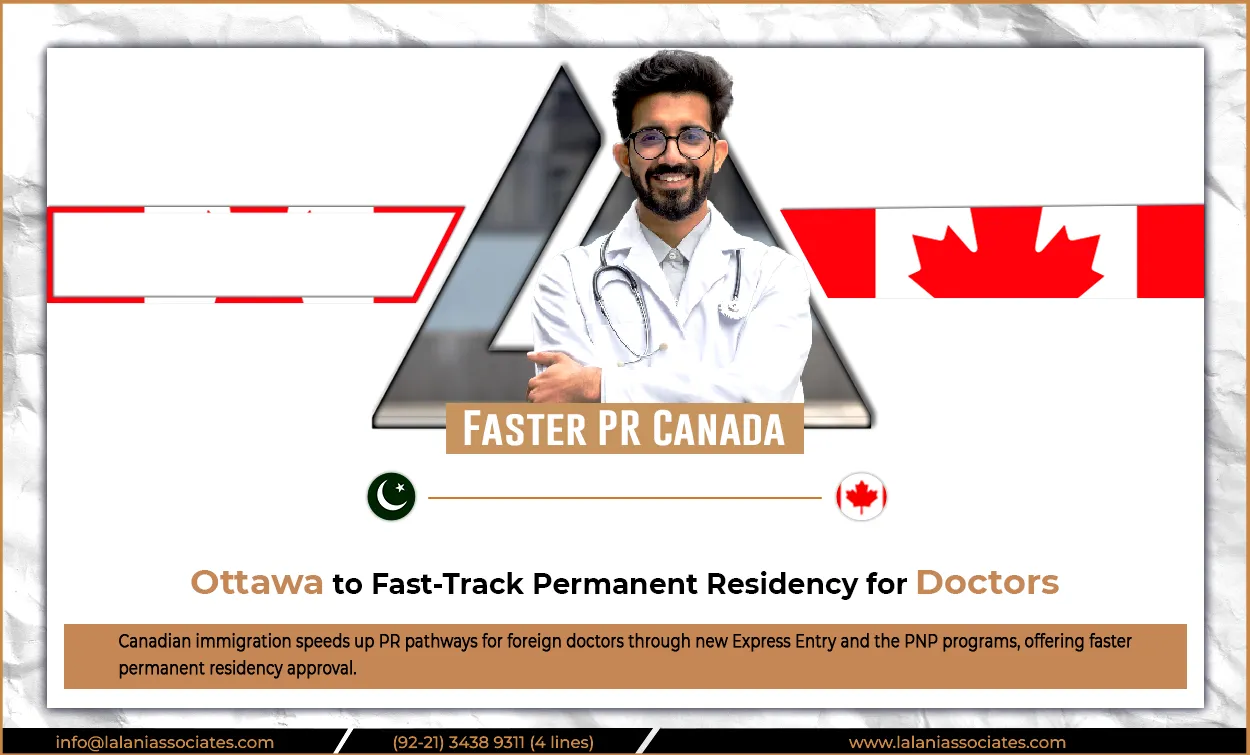
Why the Government is Introducing This Program
Canada has had trouble finding enough doctors for years. Over 5.7 million adults and 765,000 children said they didn't have a regular doctor. Emergency rooms are full, people have to wait long, and rural areas are severely short of care
The federal government believes that retaining foreign doctors currently in Canada is the quickest way to fill this deficit
The Current Doctor Shortage in Canada
The Canadian Medical Association (CMA) says that Canada is short 23,000 family doctors right now. Also, more than 13,000 doctors who were trained outside Canada and now live there are not practising in their fields because of licensing issues
The goal of this new path is to identify this talent and strengthen the workforce
How the New Fast-Track Express Entry Stream Works
Eligibility Requirements for Foreign Doctors
The new Express Entry stream is only open to doctors who meet these requirements:
Provincial Nominee Program (PNP) Boost for Healthcare Professionals
Additional 5,000 PR Spots for Healthcare Workers
Provinces and territories are getting up to 5,000 more PR nominations just for healthcare workers, like doctors, nurses, specialists, and medical technicians
How Provinces Will Nominate Foreign Doctors
Provincial governments will assess the need for healthcare workers in their areas and rapidly select qualified doctors to fill those posts
14-Day Work Permit Processing
Foreign doctors who have job offers and provincial nominations will receive their work permits in just 14 days, allowing them to start working right away
Impact of the New Policy on Canada’s Healthcare System
Reducing Wait Times and Filling Local Shortages
People in Canada have to wait months to see specialists. Provinces can do the following by getting additional doctors into the system more quickly:
• Ease the strain on emergency rooms
• Cut down on wait times for specialists
• Make primary care easier to get to
Improving Access to Family Doctors
Many Canadians don't have a family doctor right now. This policy is aimed squarely at the deficit in family medicine
Support from Health Leaders in Canada
The CMA backs the idea and says that Canada needs a national framework for managing its healthcare staff right away.
Challenges Faced by Internationally Trained Physicians
Licensing Barriers in Canada
International doctors typically have to deal with:
• Long wait periods for tests
• Repeated tests
• Hard licensing examinations
• Not enough recognition of their international training.
Recognition of Foreign Medical Credentials
Recognising credentials is still the province's responsibility, which creates differences between them
Restricted Certificates and Their Limitations
Most new international doctors acquire "restricted certificates," which limit:
• What they can accomplish in their field
• Where they can work
• Their ability to apply for particular PR streams.
Some visa consultants treat all doctors who are restricted the same way, even if the restriction is merely for training and not for disciplinary reasons
Growing Interest from U.S. and International Doctors.
Increase in U.S.-Trained Physicians Moving to Canada
There are more doctors from the US coming to Canada:
• Ontario gave out 493 certificates to US doctors this year, up from 209 last year.
• BC got 405 applications from US doctors.
• Nova Scotia increased the number of licences it gave to U.S.-trained doctors
Reasons Foreign Doctors Prefer Canada
Many people choose Canada because it has:
• A national healthcare system
• A better work-life balance
• Safer communities
• Opportunities for long-term PR
The Impact of U.S. Politics on Medical Migration
Many American doctors are seeking more stable places to work due to political uncertainty, especially after leadership changes
PR Limitations Faced by Foreign Doctors
Costly Work Permit Renewals
Most work licences only last three years, so they have to be renewed, which costs a lot of money
25% Foreign Buyer Tax in Ontario
Without PR, foreign doctors who buy property in Ontario have to pay a 25% tax, which makes it less likely they will stay long-term
Difficulty Settling Without PR
Doctors say they feel uneasy living in rentals because they can't properly plan their futures
Government and Industry Response
Lena Metlege Diab, the Immigration Minister, said the new approach allows doctors to settle in quickly and fill important gaps
Statements from the Immigration Minister
The CMA is asking for:
• Planning for healthcare at the national level
• Faster recognition of credentials
• Immigration possibilities that last
Plans for a New Provisional Class of Registration
Ontario's medical college is looking at a new temporary registration stream to help doctors from other countries
What This Means for Express Entry and PNP Applicants
Better Chances for Healthcare Professionals
Doctors will get higher CRS scores, get processed faster, and have new, specialised paths
How Express Entry Will Prioritize Doctors
Draws based on special categories will focus on healthcare jobs with lower CRS cut-offs
New Opportunities Under PNP
Provinces can now suggest thousands more foreign doctors who will get:
• PR faster
• Work permits faster
• A guaranteed job
Conclusion
The Canadian immigration decision to speed up the process for foreign doctors to obtain permanent residency is a major step towards resolving the country's doctor shortage. Internationally trained doctors can now easily and quickly build stable, satisfying careers in Canada thanks to new Express Entry pathways, faster PNP nominations, and faster processing of work permits
This strategy is good for doctors and strengthens the Canadian healthcare system, ensuring that millions of Canadians get good care when they need it
The floodgates are finally opening wider than ever for foreign doctors who want to stay in Canada for a long time
FAQs
1. Who is eligible for the new, quick Express Entry stream?
Doctors from other countries who have worked in Canada for at least one year in the last three years and meet the requirements to receive a licence
2. What types of medical jobs are included?
Family doctors, surgeons, specialists, cardiologists, lab medicine professionals, and more
3. How quickly can a doctor from another country receive a work permit?
If you have a provincial nomination, you can get your work visa in just 14 days
4. Will this affect the CRS scores for Express Entry?
Yes, the healthcare-focused category and specific streams will help doctors get PR with lower CRS ratings
5. Is it possible for doctors from other countries to acquire a residence without paying taxes?
They don't have to pay Ontario's 25% foreign buyer tax after they get PR
0 Comments